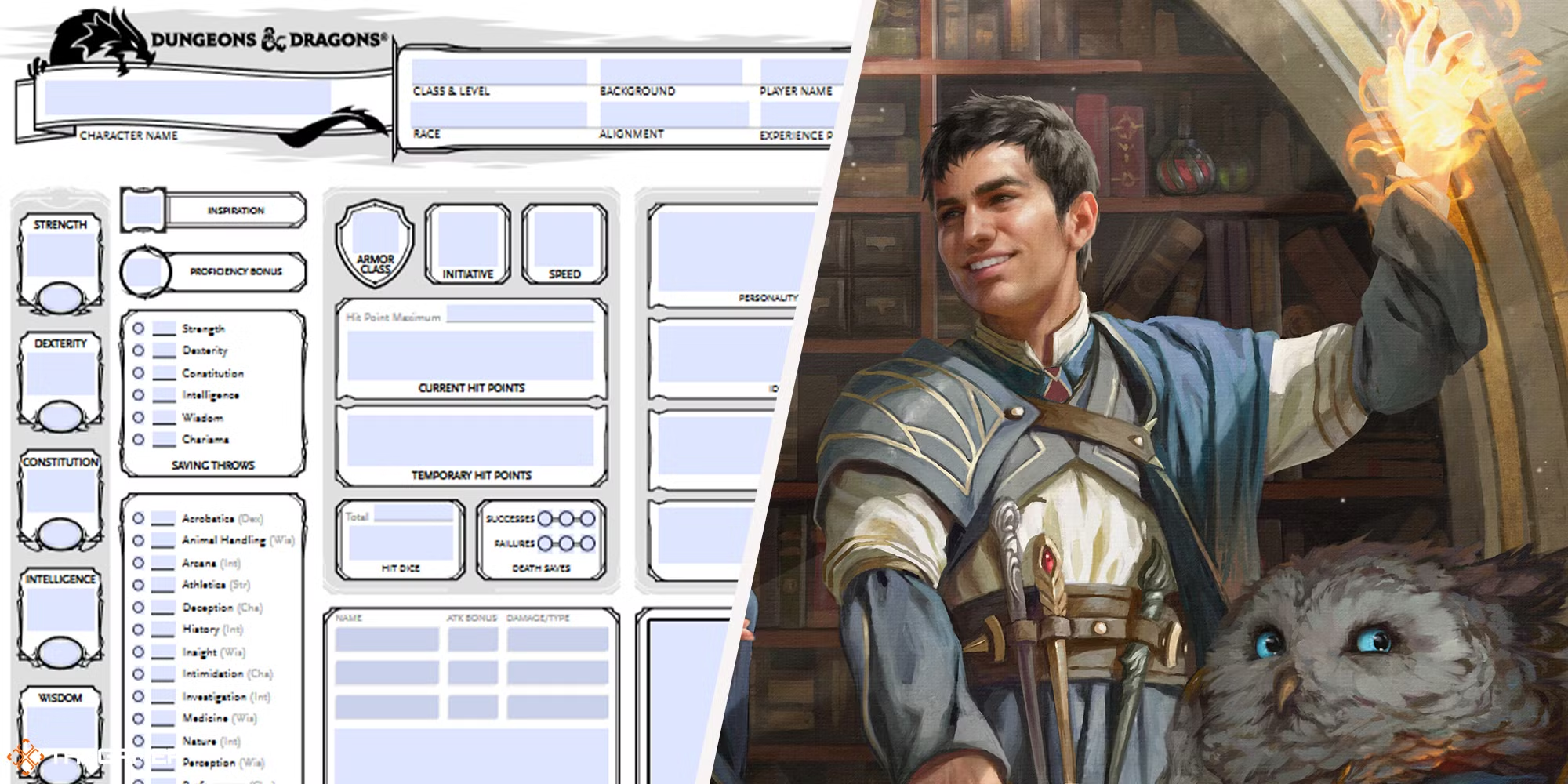
The character sheet is the foundation of everything a player does in D&D. It represents both who your character is mechanically (stats, abilities, spells, equipment) and narratively (backstory, personality, goals, and relationships). Every roll you make, every decision you take, and every strength or weakness your character has can be traced back to what’s written on this sheet.
A good character sheet doesn’t just exist to track numbers — it helps guide roleplay. Your skills suggest what your character is good at, your flaws suggest mistakes they might make, and your background explains why they react to situations the way they do. For new players especially, the character sheet acts as a roadmap: when you’re unsure what to do, looking at your proficiencies, features, and personality traits can inspire action.
Importantly, the character sheet is also the main way the DM interacts with your character. It tells them what challenges will be fun for you, what moments might feel personal, and how to involve you in the story meaningfully. That’s why filling it out thoughtfully matters just as much as choosing powerful abilities.
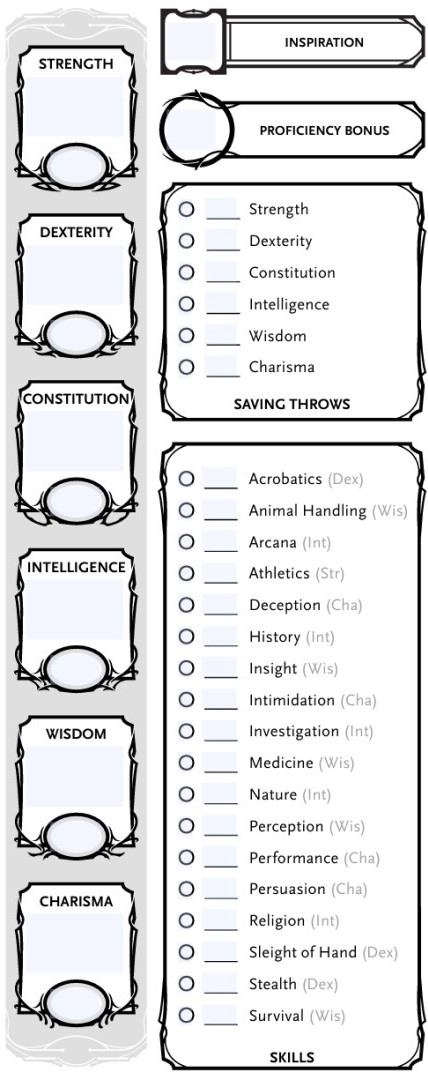
One of the most important parts of the character sheet is the ability scores and skills. The six main stats — Strength, Dexterity, Constitution, Intelligence, Wisdom, and Charisma — define what your character excels at and struggles with. Skills are extensions of these stats and determine how effective your character is in common situations like sneaking, persuading, investigating, or surviving in the wild. These directly affect dice rolls and are used constantly throughout the game.
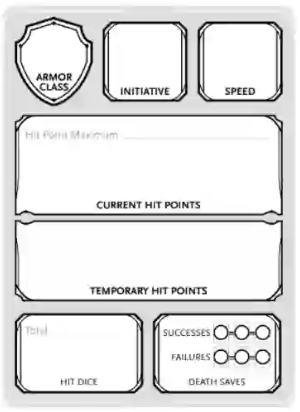
Another core section is HP & AC, which includes Armour Class (how hard you are to hit), hit points (how much damage you can take), initiative (how fast you react), speed (how far you can move), and death saves. These stats determine your survivability and positioning, especially in combat, but they also influence how confident your character is in dangerous situations. A heavily armoured fighter approaches problems very differently from a fragile wizard.
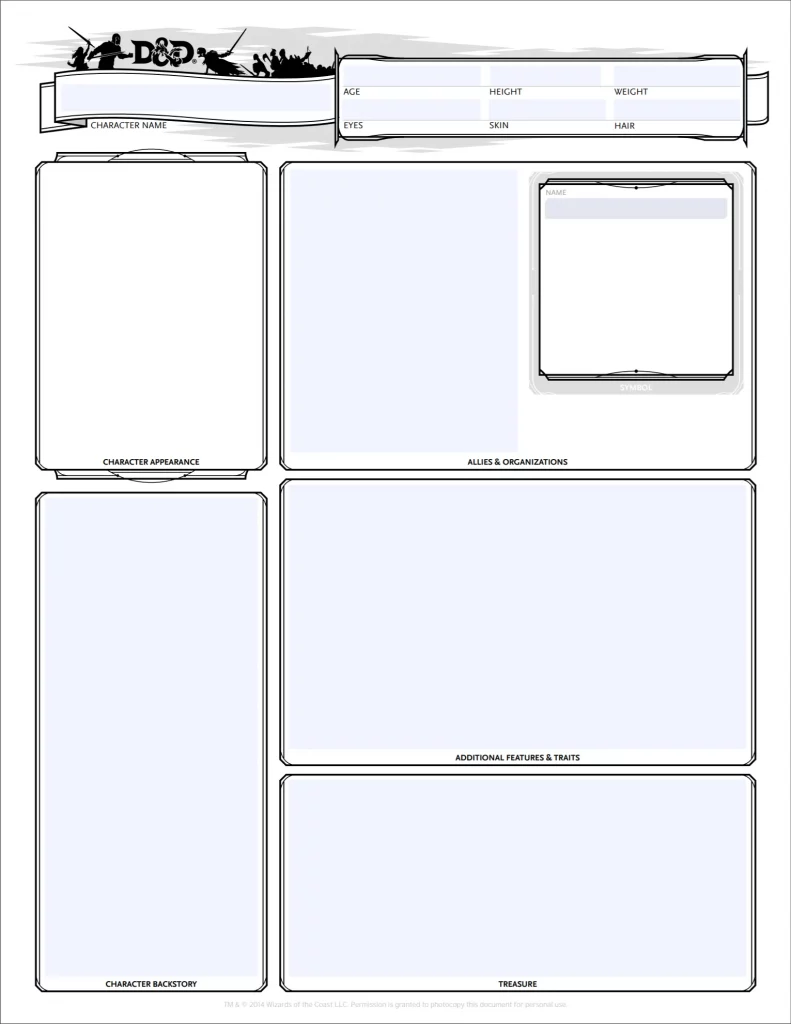
The second page of the character sheet focuses more on story and personality: backstory, allies, appearance, personality traits, ideals, bonds, flaws, and sometimes treasure or notes. While these don’t usually affect dice rolls directly, they heavily influence roleplay. A character’s ideals might stop them from taking a bribe, or their bond might push them to risk their life. These sections are what turn mechanics into meaningful storytelling.